
Tooling · 2026
Orchestra
Design-focused AI agent harness for software developers. Connects your locally run agents to your phone.
Interactive prototype · design system in use
The problem
Every agent still needs a supervisor.
Anyone who has built with AI agents knows the work doesn't end once you've said what to build. It turns into supervision: “build that,” “review it,” “plan the fixes,” “apply the fixes,” “now review the plan.” Days of that, for a single feature.
I wanted to turn that supervision into reusable instructions: what an agent needs to know, how it checks its work, and when the next phase begins. The challenge was making that process work for any coding task.
The approach
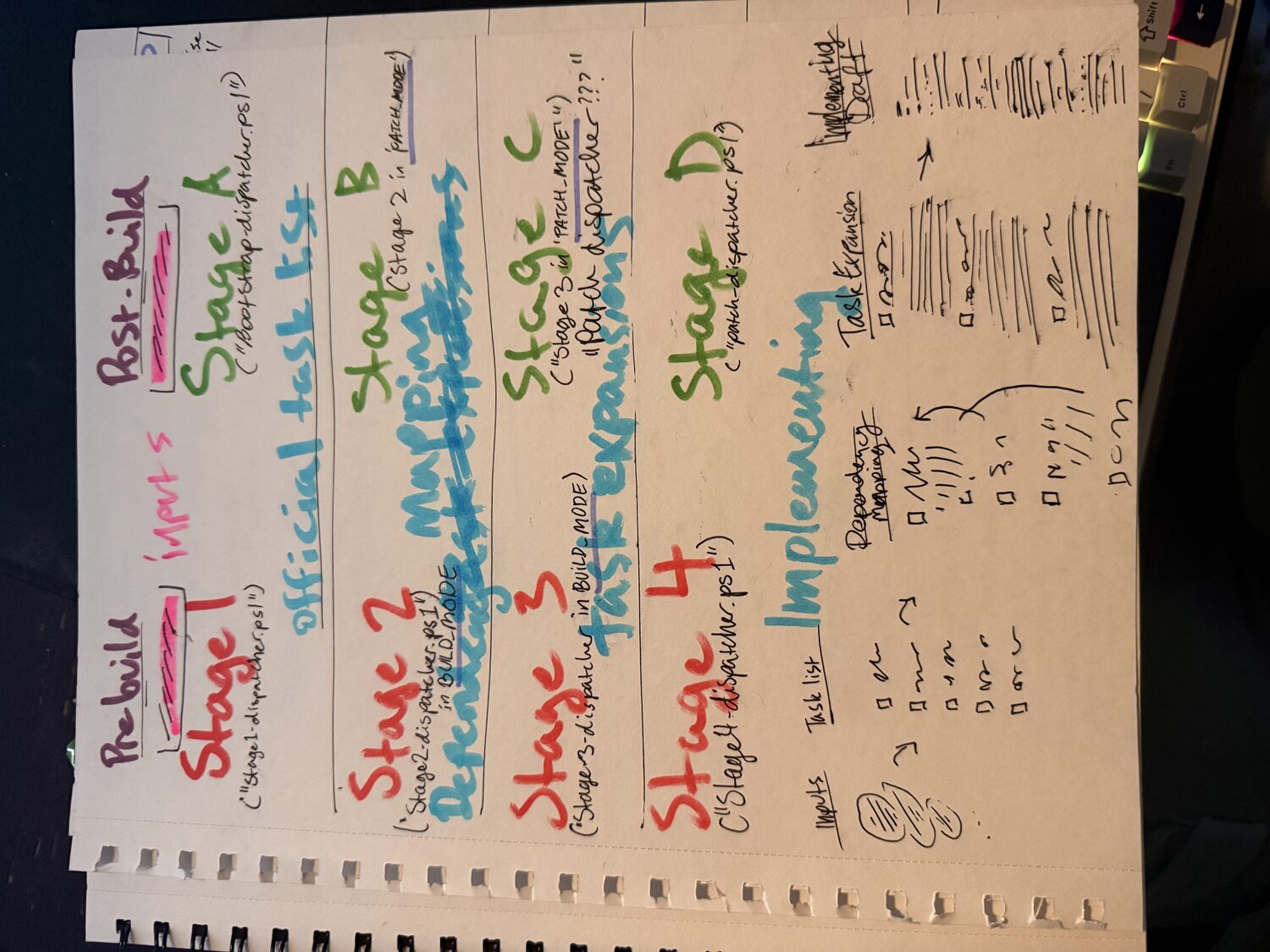
Turn repeated instructions into a system.
Every agent starts with instructions. I used to write each set by hand, but the same tasks kept coming up: planning fixes, reviewing code, and checking results. Orchestra turns those recurring patterns into instructions that adapt to each task.
Bash scripts coordinate the process, managing files, launching agents, and moving the work forward.
When an agent finishes, it signals completion through a flag file, like ringing a bell. Orchestra detects that signal, closes the agent’s window, and starts a fresh agent with instructions for the next phase.
The hard part
Coordinating models, limits, and projects.
- Working within weekly limits. Orchestra swaps in suitable agents to make better use of multiple subscriptions. The /crosstalk and /throttling scripts let agents spawn one another and check usage by reading their terminals, much as a person would.
- Managing several projects at once. The /pm agent now operates my dispatchers across projects. It keeps up better than I could: monitors feed it events from every dispatcher and subagent, giving it a live view of the whole fleet.
- Finding out what each model can do. Company benchmarks can favor their own models, so I run my own A/B tests on real coding tasks. The studies section records how the models compare and which jobs I can trust them with.
Discovery & planning
Claude
Opus 4.8
Sets the direction: discovering what matters, drafting plans, and questioning them before the build begins.
The Opus baseline score in the lead-chair study. Discovery and planning stayed with Claude.
Read the studyEditorial scores from the lab’s studies and role assignments.
Players · 29 Aug 2026My daily workspace, coordinating agents across several projects. 0:05
Outcome
The engine behind my daily development.
More than 1,600 commits; it now drives my own development across the projects on this site — and it is the product behind the enterprise pitch below.
Presentation design · pitch deck, in progress
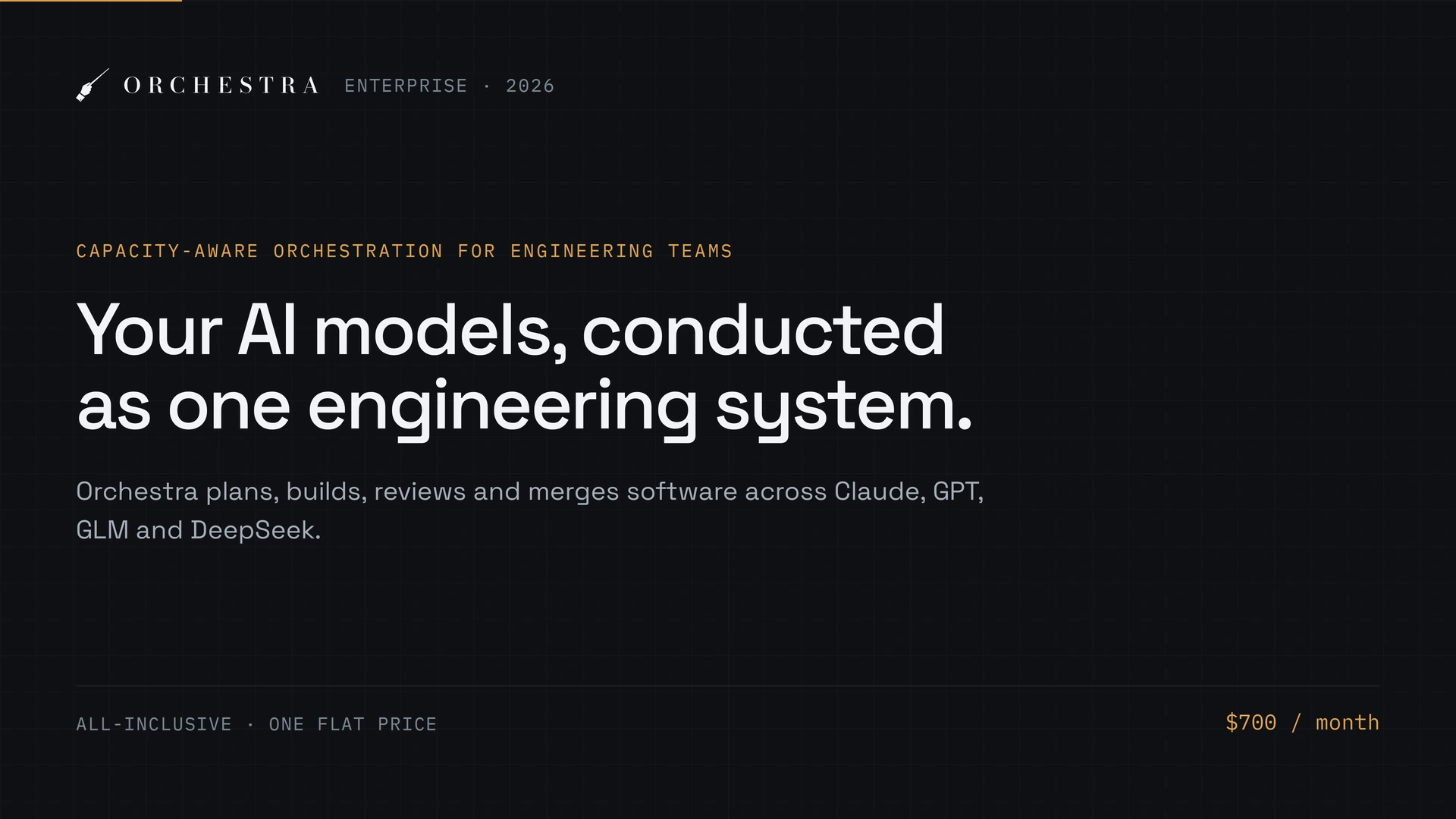
Turning a complex system into a clear pitch.
A fifteen-slide presentation explaining Orchestra’s workflow, model coordination, and value to engineering teams. Design and messaging are still being refined.
That slide couldn’t load. Please try again.
Open the original deck ↗